
Notes from a sunset
or, Coping through cowboying

I recently spent a weekend in Albuquerque, New Mexico. I was house-hunting, in preparation to move at the beginning of July so that I can attend the Art + Ecology MFA program at the University of New Mexico (that’s right! They let me in this time! Fools!!!). It’s been more than five years since I left the Western states, and I am extremely happy at the prospect of returning. I spent most of my last day there working in a coffee shop, and as evening approached I packed up my stuff to head back to my AirBnB (to watch the new episode of Interview with the Vampire).
I stepped outside and was hit in the face by a sunset of utterly baffling proportions. Vast, peach-colored cumulonimbus towered over the plains that stretch west of Albuquerque, their undersides gleaming, gold, and luminous. To the east, the Sandia Mountains were completely drenched in lurid pinks and purples, with craggy peaks picked out in deepest violet. The sky bloomed in smooth washes of softest blues and yellows. It was a staggering sight.
I turned east down Central Ave, contorting myself as I walked so I could keep watching the sunset. A feeling almost like panic rose up in me. How does one handle the horrific, overwhelming beauty of the American West? What human measure is an appropriate response to the bewilderingly matter-of-fact dramas that play out daily in these vast mountains and deserts? I felt torn between some deep urge for furious movement and a rising sense of paralysis. The sun dropped lower behind the plains, and the pristine, curved edges of the clouds were rimmed in a golden light so bright and concentrated it seemed almost electric.
A desire formed and solidified in me:
I wish I was still cowboying.
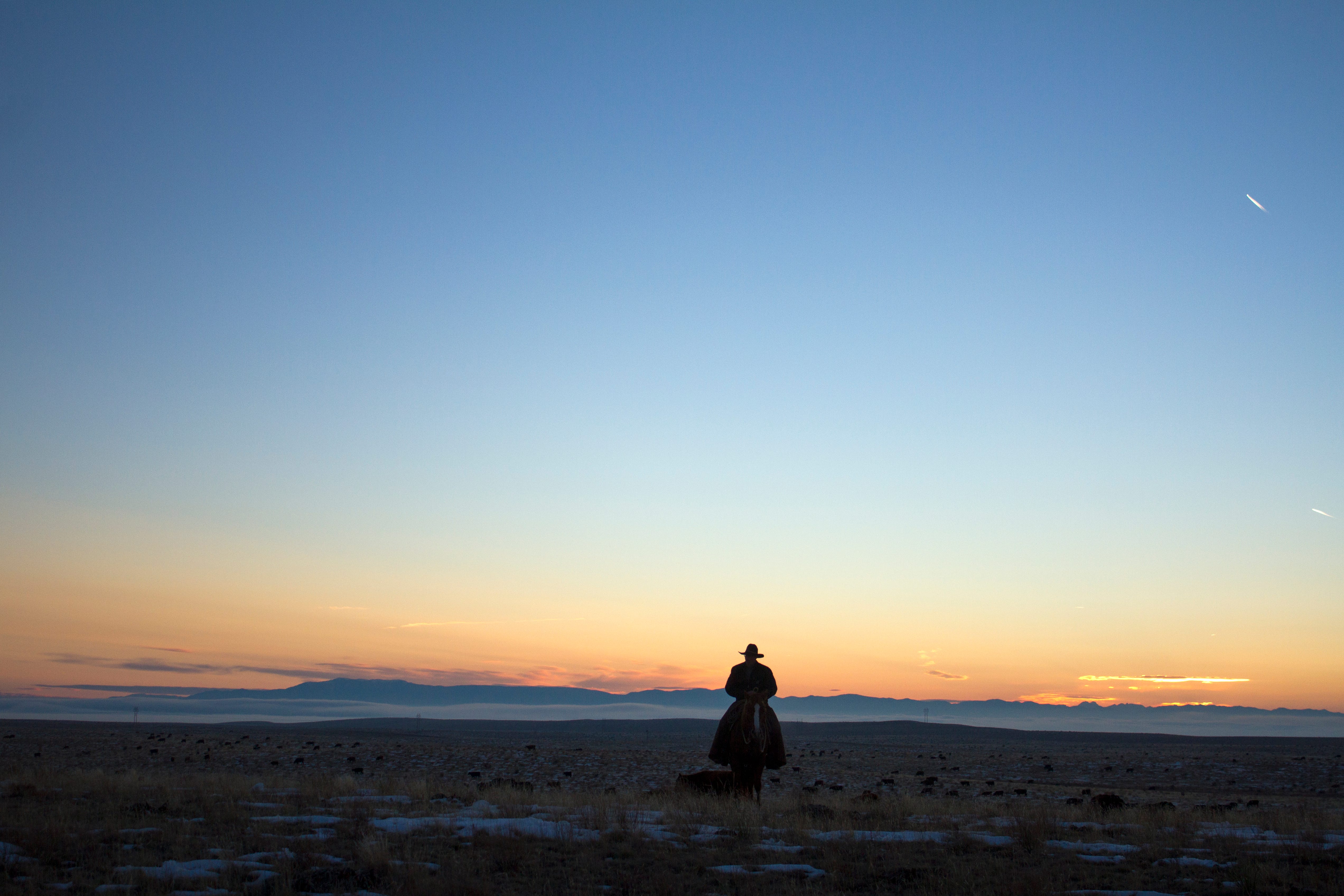
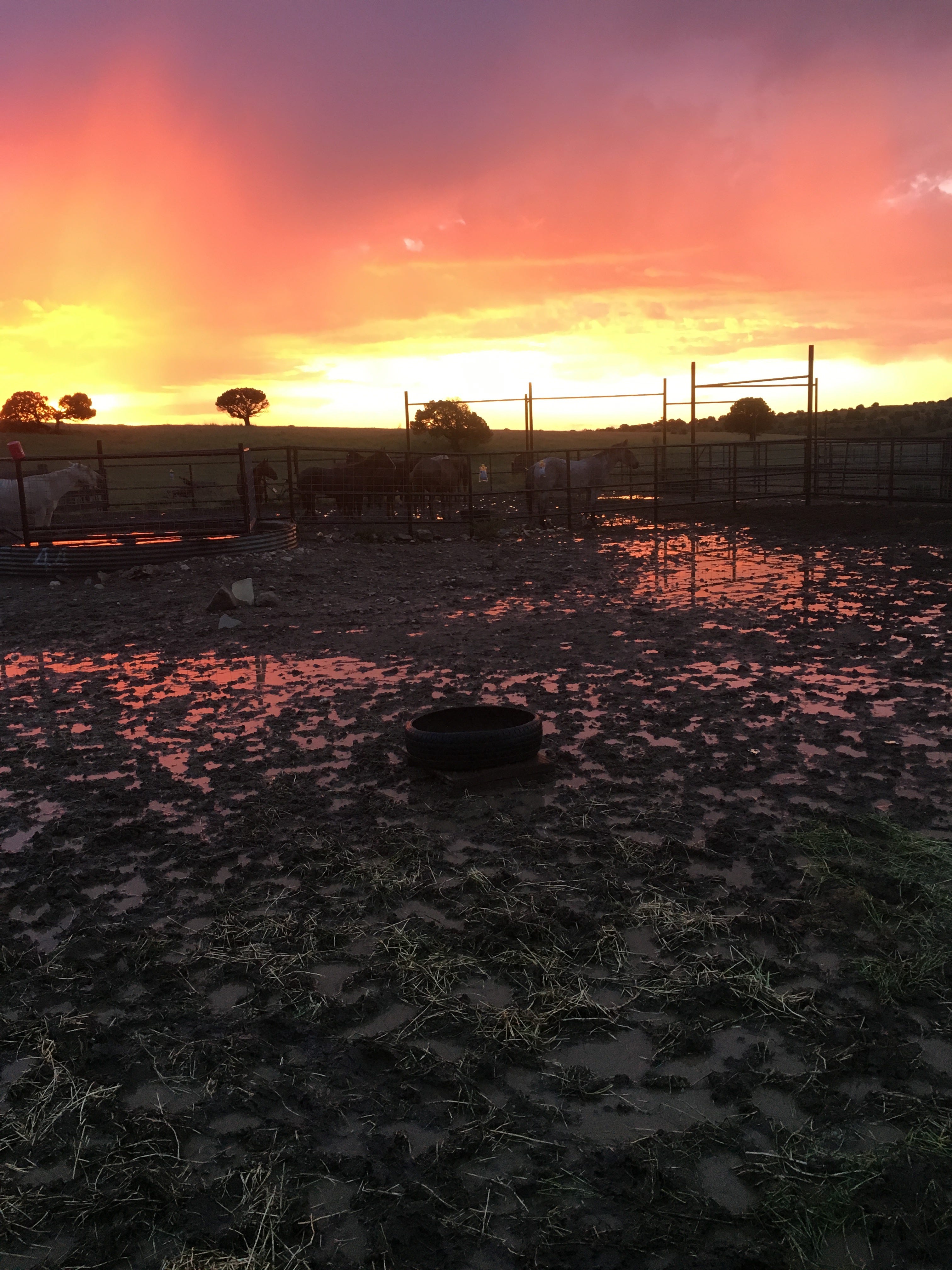
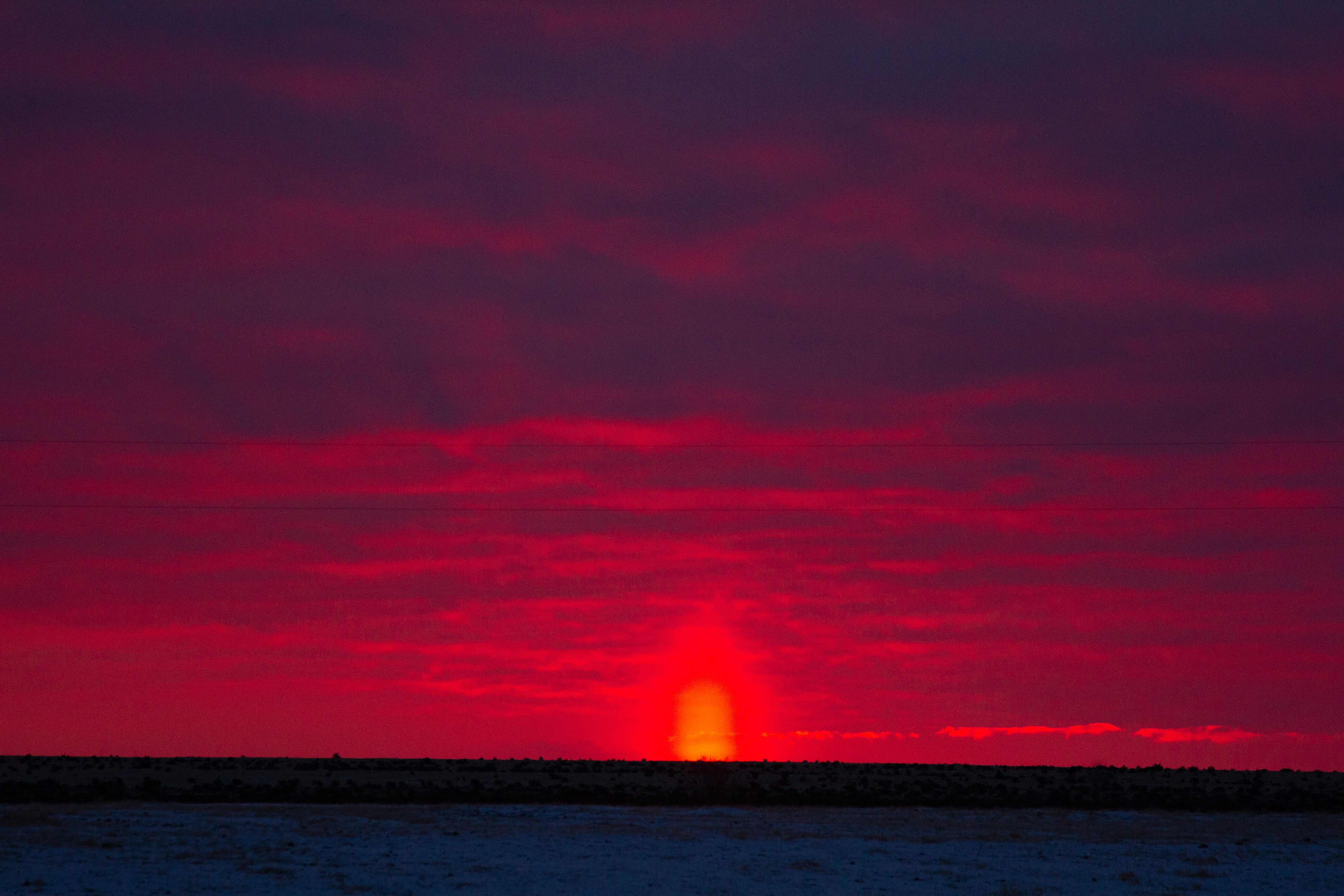
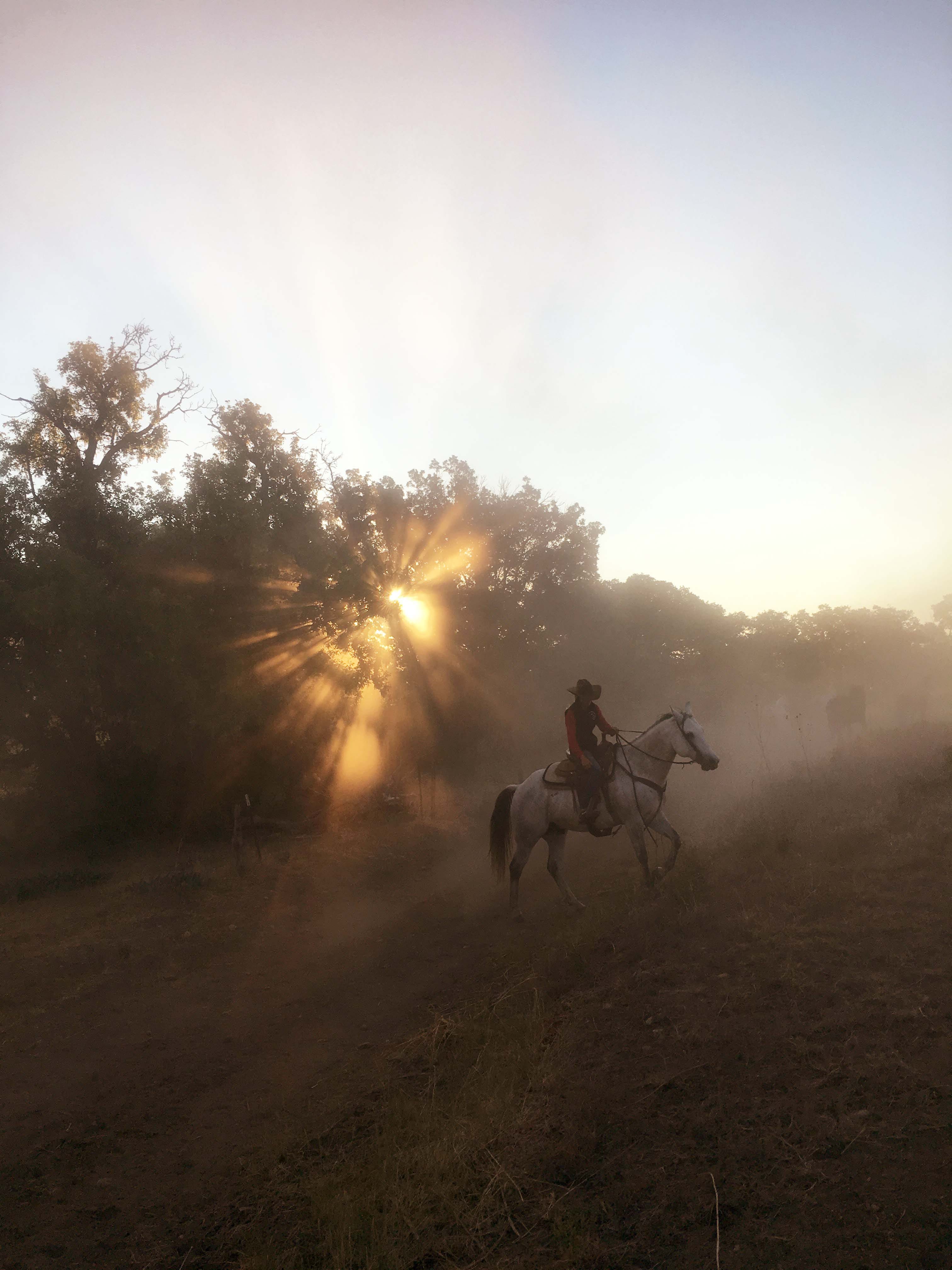
Memories of past vistas rose to the surface. A wet sunrise on the Mescalero Apache Reservation in 2017 that illuminated the puddles and fencelines in flushes of brilliant, living pinkness. Some weird combination of atmosphere and sunbeams on a wintery Colorado morning in 2016 that created a huge column of magenta light rising above the prairie. An evening in 2018, when the dust kicked up from running horses coalesced into halos before the setting sun. Witnessing these scenes feels similar to floating in the ocean - an all-encompassing, drownable experience that dominates your thoughts and senses. Yet unlike the ocean, standing before a landscape in the West offers nothing tangible to hold onto: no cold water, no salt, no rolling buoyancy. It’s an overwhelming sensory experience without any contextualizing physical reassurance.
Why did this sunset feel so different than the others? Standing on Albuquerque’s Central Avenue as the sky exploded with light and color felt like when I misjudged the strength of the waves in Lake Michigan one summer. After floating for too long, I righted myself to find that the comforting bottom had vanished from my feet, and an unexpected current swirled in its place. Heavy waves rolled over me as I struck out back to land. Normally so confident in my swimming abilities, I looked up at the shore and realized it hadn’t gotten any closer. I was surrounded by forces infinitely larger and stronger than myself and it was a dizzying, sickening experience.
In Lake Michigan and in Albuquerque I felt weak before the vastness of nature, impotent before its all-encompassing strength. This was new: I’ve lived in the American West for a long time, and had never before felt such anchorlessness. The difference, I realized, was that before I had had an anchor: cowboying.
The cowboy’s life and work is in the American West - that mythological realm that tiptoes the line between fiction and reality. It is his natural habitat. There is no doubting his place is here: everything in our nation’s history, culture, and society affirms it. A cowboy removed from the West is a pirate marooned from his ship: lost, wandering, and desperate to get back. The cowboy work, actual and the mythologized, creates a relationship and sense of righteous belonging within the landscape around you. It matters less what the work is - cattle herding, rodeoing, singing, movie-making, influencing - for it has intrinsic value by virtue of you being the one to do it. Out of the many roles that human beings take up in the American West, cowboying allows you to be an active participant, an agent of the West’s historical and contemporary definition.
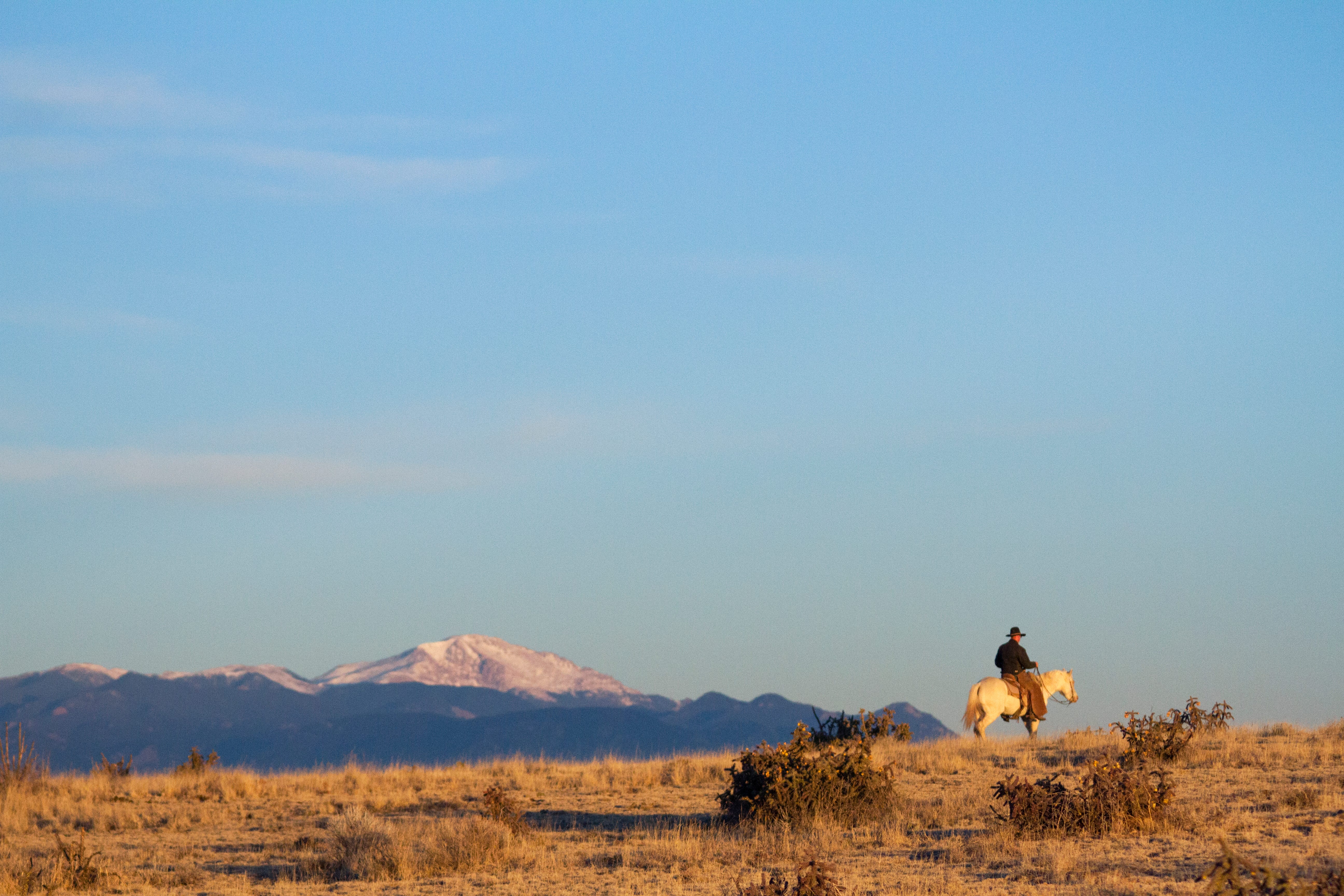
The ultimate American, a cowboy’s existence is his profession, and his profession depends on his appearance. There is perhaps no other profession besides fashion models that is so aware, so proud and admiring, of their own appearance. (Certainly no other profession, in my experience, has been so eager to be photographed while working.) A cowboy need not be overwhelmed by the beauty of the American West - unmanned by it, daresay - when he both exerts dominion over and contributes to it. For the cowboy knows he is beautiful, that he has been made beautiful by the history, context, and desires that surround him. What scene of snow-capped peaks or desolate mesas is not improved by the silhouette of our cowboy atop his horse? See how he easily he sits, leather reins held loosely in one hand, and squints across the yawning canyons! See how he pinches his hat just so, re-knots his wild rag so many times, picks out the perfect piece of antler to make a handle for his knife.
In the ways that we have constructed the American West - that most magnificent and desirable of settings - it does not exist without the cowboy. They are inseparable, one defining the other. The cowboy is interchangeable with the American West, so much so that he is the American West. As such, he is bestowed the same glory and awe, the same unearthly beauty and power, as these landscapes that he inhabits. The cowboy is the West’s master, even as he grins and tugs his hat down over his eyes, muttering something about just trying to be a good hand. By extension, then, he is also master of those who would wish themselves in his place - which is everybody. The cowboy’s whiteness (or non-whiteness, on occasion) is his spotlight; his maleness is his halo. He smiles down at us as we shroud him in a cloak of adoration and crown him with our envy.
Since the West and the cowboy are one and the same, his actions in this landscape need not be questioned - ought not to be questioned! He is the landscape. His actions are as natural as a thunderstorm moving across the plains, unstoppable and irrefutable. To question the role of the cowboy is to question the role of nature itself. To stand in his path is to risk being swept away on the tide of his righteous actions.
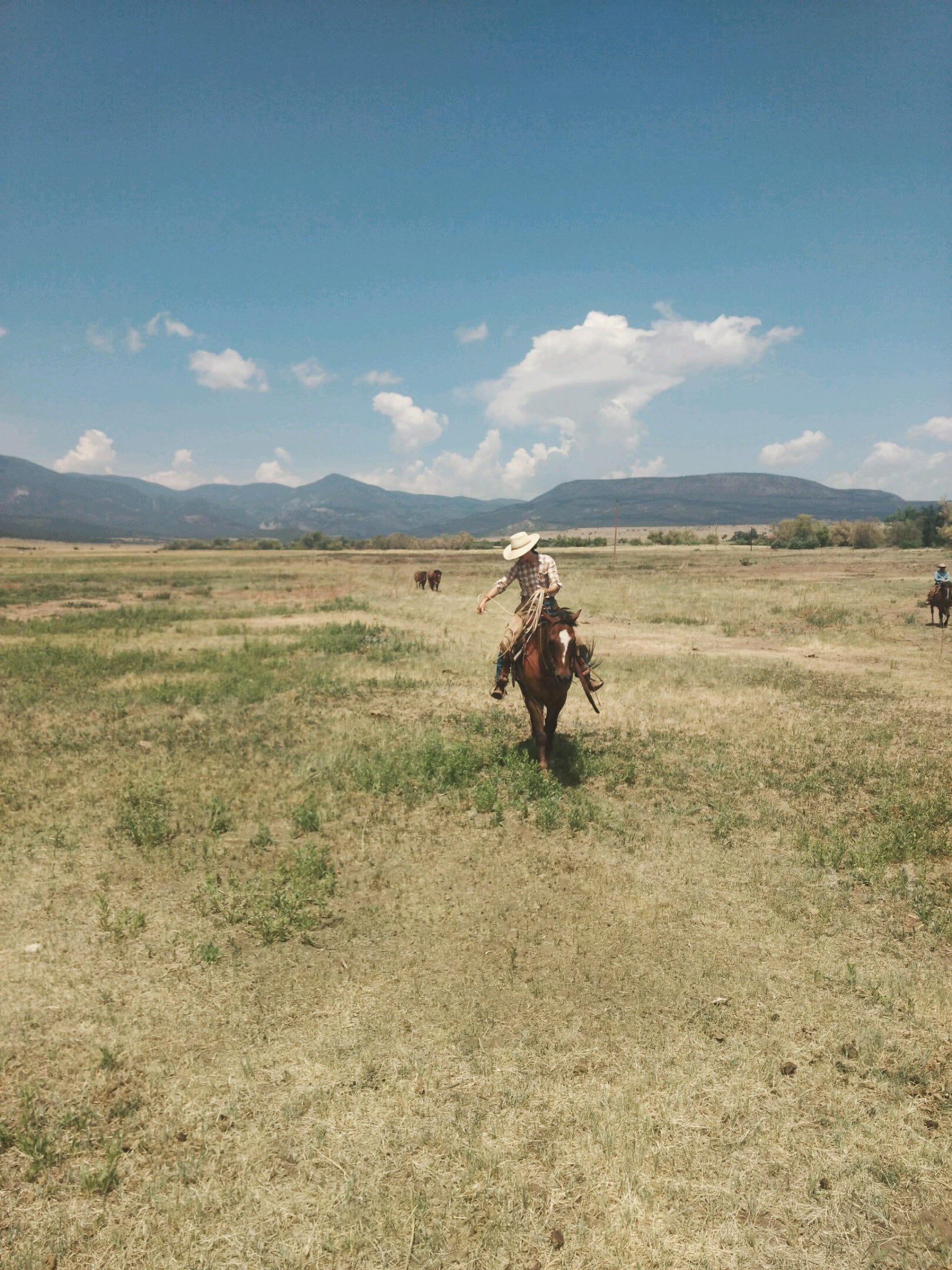
I suppose it’s time to seek out a new anchor, so that I might keep myself afloat in this next chapter of Life In The West. Maybe I just need to read more Romantic poetry or something.
Till next time,
Luca